
The hustle and bustle of Indian life, from the crowded streets of Mumbai to the serene backwaters of Kerala, reflects a nation in constant motion. But beneath this vibrant energy lies a pressing question: what are we doing to protect our planet? The need for a sustainable future isn’t a distant, abstract concept—it’s a critical challenge right at our doorstep, with consequences that are already becoming all too real.
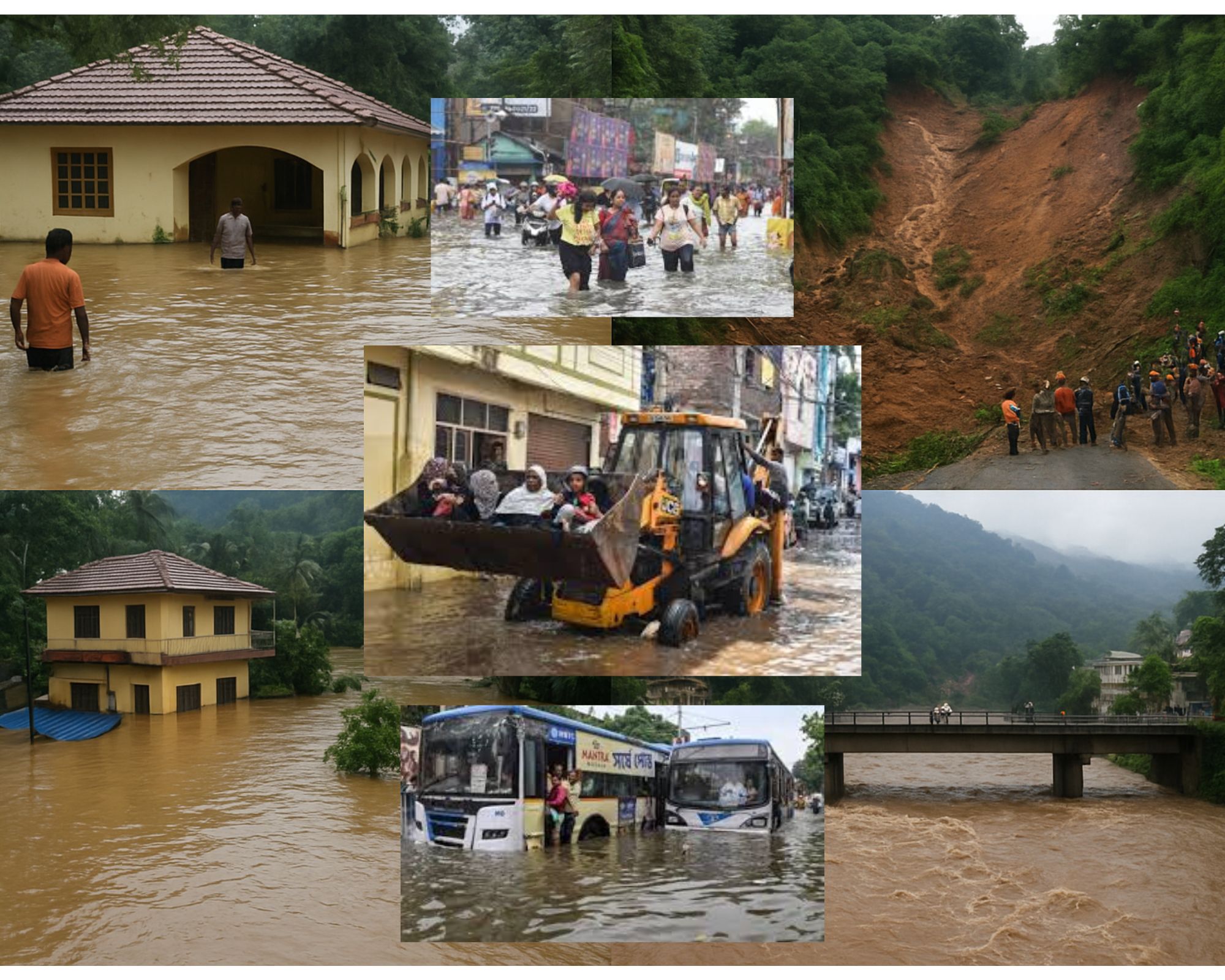
Our environmental challenges are escalating daily. We’re seeing more frequent and severe weather events, like the devastating floods that recently ravaged parts of North India or the unseasonal heatwaves that scorch our cities. These aren’t isolated incidents. They are stark reminders that our current way of life, with its overreliance on unsustainable practices, is putting our planet and its inhabitants in jeopardy. While the news often highlights global disasters, the recent floods in Himachal Pradesh or the cloud burst episodes in Hyderabad, Bangaluru or Kolkata, we must recognize that these events underscore a universal truth: climate risk transcends borders. Even nations that contribute minimally to the problem, like many of our neighbouring countries, are facing the same threats. This highlights our collective responsibility in addressing this crisis.
The Data Gap: Why We’re Running Blind
One significant obstacle on our journey toward sustainability is a lack of granular data. Imagine trying to plan a long-distance run without knowing the terrain, the distance, or the rest stops. That’s essentially what we’re doing when we try to tackle climate risk without detailed, localized data. This isn’t just about environmental statistics; it’s about understanding the financial risks associated with climate change. Without accurate data, it’s impossible to calculate the true magnitude of the problem and formulate effective, targeted strategies. Whether it’s the financial impact of crop failures due to irregular monsoons or the cost of rebuilding infrastructure after a flood, having this information is essential for making informed decisions.
The Middle-Distance Run: Every Step Counts
The journey toward sustainability isn’t a short sprint where a few quick actions solve everything, nor is it a marathon where we can pace ourselves indefinitely. It’s a well-judged middle-distance run—a continuous effort where every single stride counts. Each step we take, no matter how small, brings us closer to a future where our planet can thrive once more.
This is a journey we must embark on together. It means making informed decisions, from the products we buy to the energy we use. It means adopting sustainable practices in our homes, our communities, and our businesses. It means leveraging technology and innovation to find cleaner, more efficient ways of living.
Ultimately, safeguarding our planet for future generations requires collective action. We must unite as a nation, from individual citizens to corporate leaders and government officials, to make sustainability a core principle of our progress. By working together, we can ensure a healthy, vibrant world for all its inhabitants, securing not just our future, but the future of our planet.
What small step can you take today to contribute to this collective run?
 sustainableelectrics.com
Leave a comment