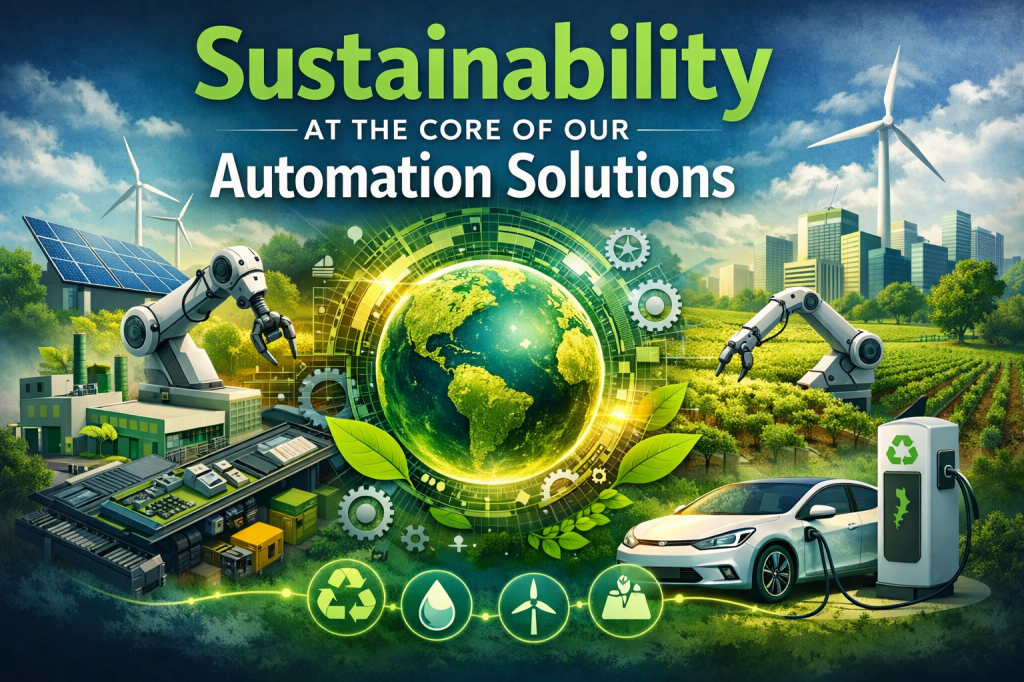
The world is moving at an unprecedented pace toward the next industrial revolution. Technologies are evolving rapidly, markets are becoming more interconnected, and expectations from industries are changing—not just in terms of productivity, but also responsibility.
In this fast-changing environment, sustainability can no longer be treated as an afterthought or a compliance checkbox. It must become a core design principle, deeply embedded in the way manufacturing systems are planned, implemented, and operated.
The Changing Face of Manufacturing
Manufacturing today is no longer driven solely by output and efficiency. Modern industries are expected to deliver:
- Operational excellence
- Energy efficiency
- Lower environmental impact
- Digital transparency
- Human-centric systems
As we transition from Industry 4.0 toward Industry 5.0, the focus expands beyond automation and data. It brings together technology, sustainability, and human intelligence into a unified model that is resilient and future-ready.
Why Sustainability Must Be Built Into Automation
Automation plays a pivotal role in shaping sustainable manufacturing. When designed thoughtfully, automation solutions can:
- Optimize energy consumption
- Reduce material waste
- Improve process consistency and quality
- Enable real-time monitoring and decision-making
- Support ESG goals through accurate data and reporting
Sustainability is not achieved by isolated initiatives. It is achieved when automation systems are aligned with long-term environmental and business objectives from the ground up.
Embracing the Technology Model
The only way to ride this wave of industrial transformation is to align with and embrace the right technology model. This means adopting solutions that are:
- Relevant to current and future industry needs
- Competitive in a global marketplace
- Scalable across plants and geographies
- Sustainable in energy, resources, and impact
Digitalization, smart sensors, intelligent control systems, analytics, and connected platforms together form the backbone of this model. When combined with sustainability-driven thinking, they enable manufacturers to grow responsibly without compromising performance.
Sailing Ahead, Responsibly
The future belongs to organizations that see sustainability not as a constraint, but as a strategic advantage. By placing sustainability at the core of automation solutions, manufacturers can ensure they remain agile, compliant, competitive, and globally relevant.
In the journey toward the next industrial revolution, technology is the vessel—but sustainability is the compass that ensures we move in the right direction.
 sustainableelectrics.com
Leave a comment